
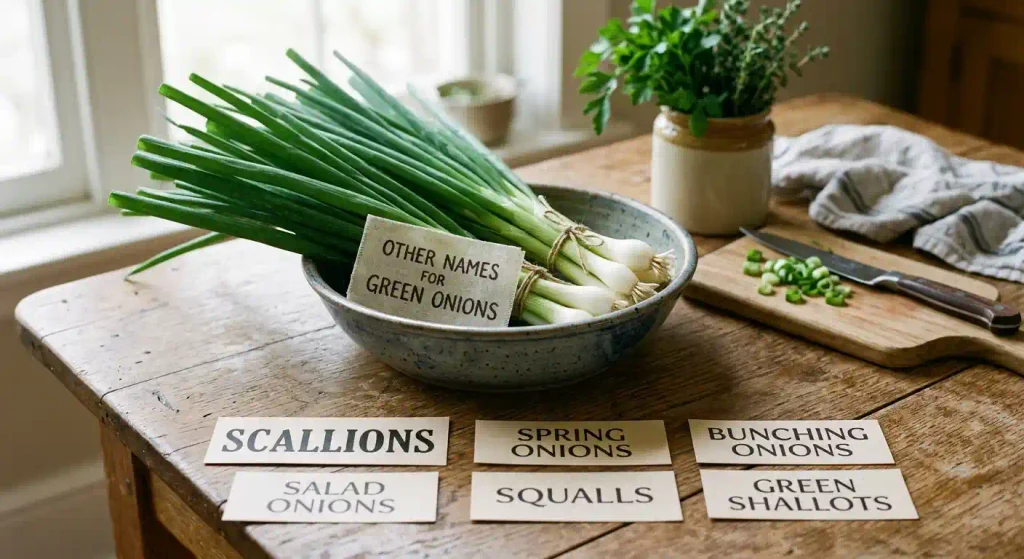
Green onions go by several names, depending on where you live, how they are grown, and how they are used in cooking. Scallions and spring onions are two of the most common alternative names, although these terms do not always refer to exactly the same type of onion.
If you are searching for other names for green onions, you may need a word for a recipe, a grocery shopping list, a gardening guide, or a conversation with someone from another country. Knowing these names can help you find the right ingredient and understand recipes from different regions.
Green onions are valued for their long green leaves, small white bases, and fresh onion flavor. They work well in salads, soups, noodles, eggs, sauces, and many other dishes. Some varieties have a mild taste, while others develop a stronger flavor as they grow.
This guide covers common green onion synonyms, regional names, culinary terms, related onion varieties, and useful names for recipes and food writing. It also explains when names such as scallions, spring onions, and bunching onions may refer to different plants. That small distinction matters when a recipe calls for a particular onion texture or flavor.
Whether you call them green onions, scallions, or something else, understanding these terms makes cooking and shopping easier.
Common Other Names for Green Onions 🌿
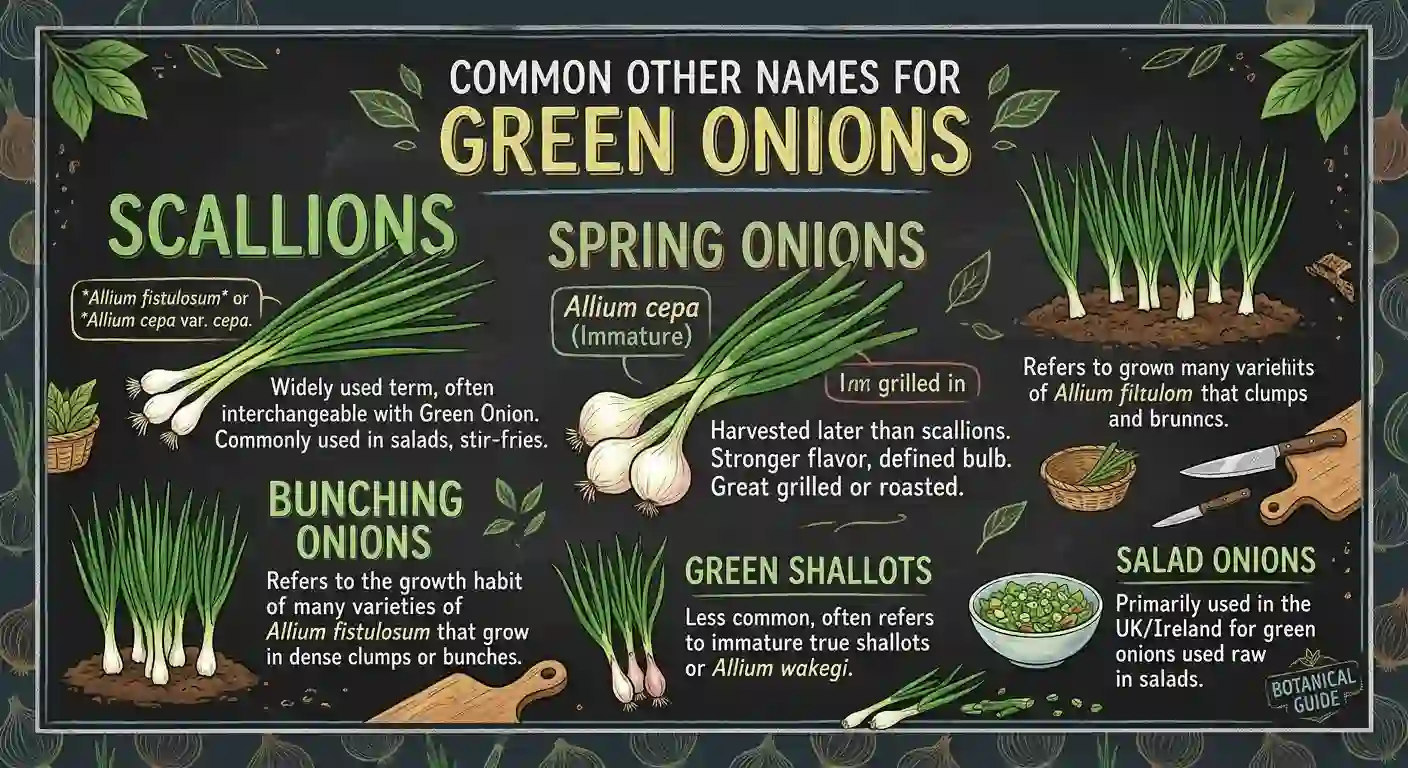
These are the most useful terms to know when reading recipes, shopping for vegetables, or talking about fresh onions.
Scallions
Scallions is a common name for green onions, especially in the United States. The word usually refers to young onions with slender green leaves and a small white base. Use it when following American recipes that call for a fresh, mild onion flavor.
Spring Onions
Spring onions are closely related to green onions and are often used as an alternative name. In some countries, the term refers to onions with a more developed, rounded bulb. It is especially common in British and other international recipes.
Green Onion
Green onion is the everyday name used throughout much of North America. It describes the familiar vegetable sold in bunches, with green tops and narrow white bases. It is a reliable term for grocery lists and general cooking instructions.
Bunching Onion
Bunching onion refers to onions grown in clusters without forming a large, mature bulb. Some varieties are cultivated specifically for their green tops and slender stems. This term is particularly useful for gardeners looking for onions that can be harvested repeatedly.
Salad Onion
Salad onion is a name used in some regions for young onions that can be eaten raw. Their mild taste and crisp texture make them suitable for green salads, potato salads, sandwiches, and fresh garnishes.
Welsh Onion
Welsh onion is a distinct name for Allium fistulosum, a species commonly grown for its green leaves and stems. Despite its name, it is not limited to Wales. It is closely related to the bunching onions used in many Asian dishes.
Japanese Bunching Onion
Japanese bunching onion is another name for varieties of Allium fistulosum grown widely in Japan. These onions are important in Japanese cooking and may have long white stems with dark green leaves. They are often used in soups, noodle dishes, and hot pots.
Green Shallot
Green shallot is a regional term that can refer to young green onions in some places, including parts of Australia. However, the word shallot can also mean a different type of small bulb onion. Check the local usage before substituting it in a recipe.
Regional Names for Green Onions 🌎
The name on a grocery label may change from one country to another. These regional terms are helpful when following international recipes.
Scallion in the United States
Scallion is widely understood across the United States. It usually means the slender green vegetable with a mild onion taste. American recipes often use scallions as toppings for baked potatoes, tacos, soups, dips, and Asian-inspired meals.
Green Onion in Canada
Green onion is a familiar term in Canada. It commonly appears on grocery labels and in home cooking instructions. The term is especially clear when a recipe needs the whole vegetable, including both the white base and the green leaves.
Spring Onion in the United Kingdom
Spring onion is a standard term in British cooking. It often refers to the same slender onion that Americans call a scallion. However, some British growers and sellers use the term for plants with more noticeable bulbs.
Spring Onion in Australia
Spring onion is widely used in Australia. Depending on the seller and region, green shallot may also appear as a local alternative. Australian recipes often use these onions in stir-fries, salads, savory pancakes, and barbecue dishes.
Spring Onion in New Zealand
Spring onion is a familiar name in New Zealand supermarkets and recipes. It generally refers to fresh, green-stemmed onions that are used raw or cooked. The term is useful when searching for local ingredients.
Scallion in the Caribbean
Scallion appears in Caribbean cooking, although local names and culinary traditions vary across islands. In Jamaican cooking, for example, scallions are a key ingredient in many seasoning mixtures, marinades, and traditional dishes.
Welsh Onion in Asian Gardening
Welsh onion is a common English name in gardening references for Allium fistulosum. This plant is grown across parts of East Asia and elsewhere. The term helps distinguish it from common bulb onions and other members of the onion family.
Negi in Japan
Negi is a Japanese word for onions in this culinary group, especially Japanese long onions and bunching onions. It can refer to several forms, depending on the dish and region. A recipe using negi may call for a larger, thicker onion rather than a small scallion.
Green Onion Names Used in Asian Cooking 🥢
Green onions play an important role in many Asian cuisines. Some local terms refer to a close relative rather than exactly the same vegetable.
Cong in Chinese
Cong is a Chinese term associated with onions in the Allium group. In recipes, the exact meaning depends on the full Chinese name and context. It can refer to green onions, scallions, or other related onions.
Spring Onion in Chinese-Style Recipes
English-language Chinese recipes often use spring onion to describe the slender onion added to stir-fries, dumplings, noodles, and sauces. The white part usually provides a stronger flavor, while the green leaves are often added near the end.
Hành Lá in Vietnamese
Hành lá is the Vietnamese term commonly used for green onions. These fresh onions are widely used in noodle soups, rice dishes, dipping sauces, and savory pancakes. Both the white base and green tops may be used.
Cebollita in Some Spanish-Language Recipes
Cebollita is a Spanish diminutive meaning a small onion. In some food contexts, it may refer to a small onion or green onion, but the precise meaning varies by country. It should not be treated as a universal name for scallions.
Negi in Japanese Recipes
Negi appears in Japanese ingredient lists and restaurant menus. It can refer to several onion types, including long Japanese onions. When a recipe specifically calls for a slender green onion, check whether the intended ingredient is a small scallion or a thicker negi variety.
Pa in Korean
Pa is a Korean word for green onions or related onion varieties. The exact type may be identified by a more specific Korean name. Green onions are used in Korean pancakes, soups, kimchi preparations, and seasoned side dishes.
Hara Pyaz in Hindi and Urdu
Hara pyaz literally means green onion in Hindi and Urdu. It is a familiar term in South Asian markets and recipes. The vegetable is used in fried rice, noodles, vegetable curries, omelets, and fresh salads.
Spring Onion in Indian Recipes
Spring onion is commonly used in English-language Indian recipes. It may refer to the leafy onion sold in bunches, though local markets can use the term differently. Both the stems and leaves can be cooked, depending on the dish.
Names for Green Onion Parts 🔪
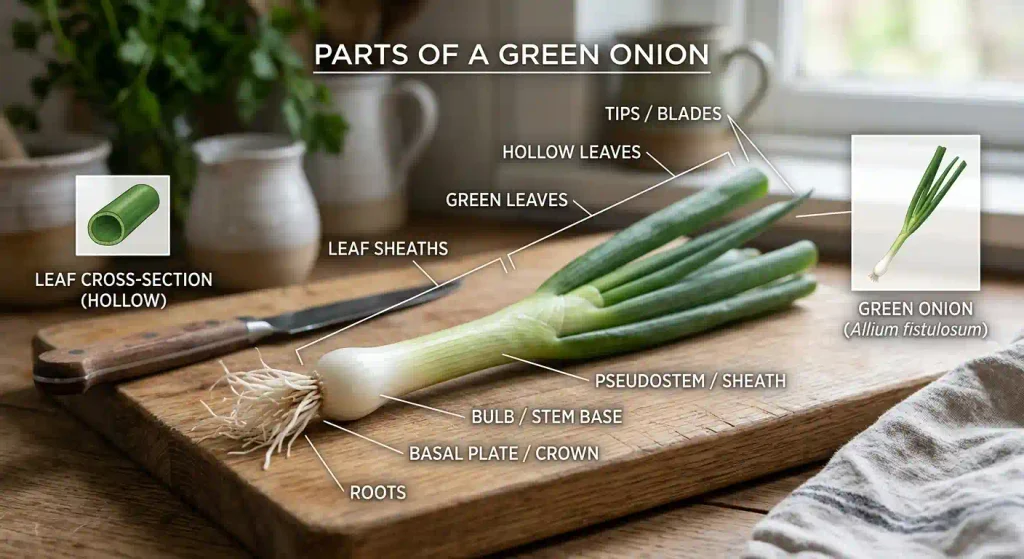
Sometimes a recipe names only the part of the green onion it needs. Knowing these terms helps prevent confusion and food waste.
Green Tops
Green tops are the long, hollow or tubular leaves above the white base. They have a fresh, grassy onion flavor and are often sliced into thin rings for garnish. Add them to soups, noodles, eggs, and salads.
Green Stalks
Green stalks is a general cooking term for the long green parts of the plant. The phrase is easy to understand, although it is less precise than green tops because some onions have leaves rather than true stalks.
White Base
The white base is the lower part of a green onion. It tends to have a stronger onion flavor than the green leaves. It is a good choice for stir-fries, sauces, and dishes where the onion needs to cook with garlic or other aromatics.
White Stem
White stem describes the pale lower section of the onion. It is commonly sliced and cooked before the green leaves are added. In some recipes, the term refers to a longer white portion, particularly when the onions have been grown with soil or covers around their bases.
Onion Greens
Onion greens is a broad term for the green leaves of onion plants. It may refer to green onion leaves or the tops of other onions. The intended ingredient should be clear from the recipe.
Chopped Scallions
Chopped scallions describe a preparation rather than a separate vegetable name. It usually means the onion has been cut into small pieces, ready for mixing into a dish or scattered over the top.
Sliced Green Onions
Sliced green onions are cut crosswise into rounds or angled pieces. This phrase often appears in recipes for noodles, soups, salads, and stir-fries. The white and green sections can be sliced separately if they need different cooking times.
Green Onion Leaves
Green onion leaves are the leafy portion of the plant. They are often used to add color and a mild onion taste to cooked meals. This term is particularly useful when a recipe calls for the leaves alone.
Related Onion Varieties That Are Not Always the Same 🧅
Some vegetables look like green onions but have different growing habits, flavors, or uses. These distinctions matter when choosing an ingredient.
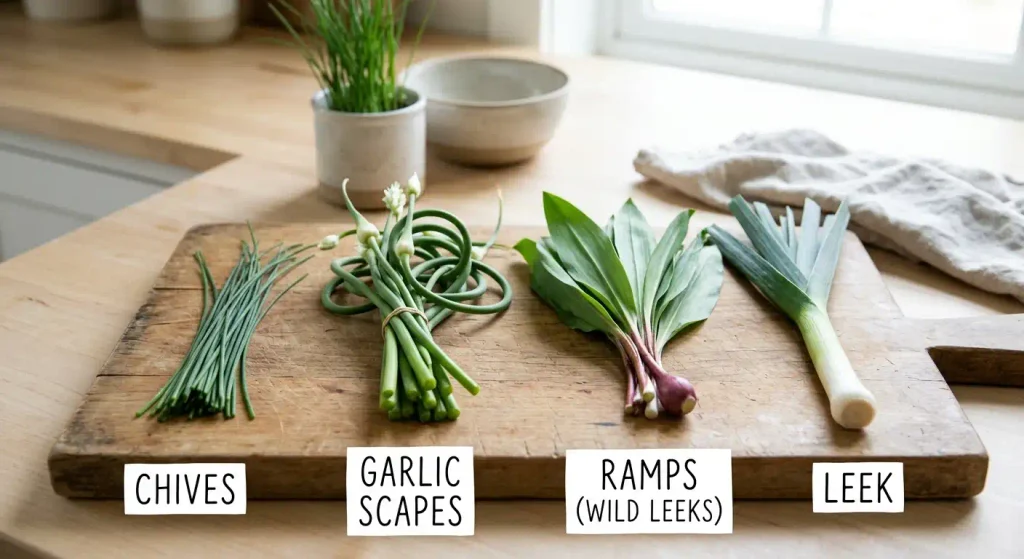
Chives
Chives are a separate herb in the onion family. They have thin, grass-like leaves and a mild onion flavor. Their delicate texture makes them ideal for garnishing eggs, soups, potatoes, and creamy sauces.
Garlic Chives
Garlic chives have flat leaves and a flavor that combines onion and garlic notes. They are not the same as green onions, despite their similar appearance when chopped. They are common in dumplings, stir-fries, and some Asian noodle dishes.
Leeks
Leeks have long, layered leaves and a thick white shaft. Their flavor is usually milder and sweeter after cooking than that of green onions. They work well in soups, stews, and roasted vegetable dishes, but are not a direct replacement for scallions in every recipe.
Shallots
Shallots are small bulb-forming onions with a delicate, often sweet flavor. They are usually sold as separate bulbs rather than long green bunches. Some recipes use green shoots, but the ordinary shallot bulb is different from a green onion.
Pearl Onions
Pearl onions are small, round bulb onions. They are often used in stews, sauces, and pickling. Their rounded shape and more developed bulb make them different from the slender green onions commonly used as a garnish.
Young Bulb Onions
Young bulb onions are harvested before they reach full maturity. Depending on the variety and growing conditions, they may have green tops and a small bulb. They can resemble green onions, but their flavor and bulb size may differ.
Ramps
Ramps are wild plants related to onions and garlic. They have broad leaves and a distinctive, strong flavor. They are seasonal ingredients in parts of North America and should not be confused with ordinary green onions.
Garlic Scapes
Garlic scapes are the curly flower stalks produced by hardneck garlic plants. They have a mild garlic taste and are used in pesto, stir-fries, and other dishes. Despite the word scapes sounding similar to scallions, they are a different ingredient.
Green Onion Names for Recipes and Food Writing 🍳
When writing a recipe, the best name is the one your readers will recognize. These useful terms describe how green onions are presented or used in a dish.
Fresh Green Onions
Fresh green onions are uncooked or recently harvested onions with crisp leaves and a clean onion smell. The phrase works well in ingredient lists when freshness matters.
Raw Scallions
Raw scallions are green onions served without cooking. They add a sharp, fresh taste to salads, sandwiches, dips, and cold noodle dishes. Their flavor is usually strongest in the white portion.
Garnishing Onions
Garnishing onions is an informal description for green onions used as a finishing touch. Thin slices add color and a mild onion flavor to soups, rice bowls, tacos, and baked potatoes. It is a cooking description, not a formal botanical name.
Stir-Fry Green Onions
This phrase describes green onions prepared for stir-frying. The white sections are often cooked first, while the green tops are added later to keep their color and texture.
Soup Scallions
Soup scallions are green onions used in soups and broths. They can be simmered for flavor or sprinkled over the finished bowl. The term describes their role in a dish rather than a separate onion variety.
Salad Scallions
Salad scallions are green onions served in fresh salads. Their mild bite pairs well with cucumber, tomatoes, leafy greens, beans, and creamy dressings. Thin slices help spread their flavor throughout the dish.
Pickled Green Onions
Pickled green onions are onions preserved in vinegar or another pickling liquid. Their taste becomes tangy, and their texture softens over time. This is a preparation style, not an alternative botanical name.
Charred Green Onions
Charred green onions are cooked over high heat until their outer surfaces develop dark marks. The heat adds a smoky taste and softens their sharp onion flavor. They work well with grilled meats, vegetables, and sauces.
Garden and Growing Terms for Green Onions 🌱
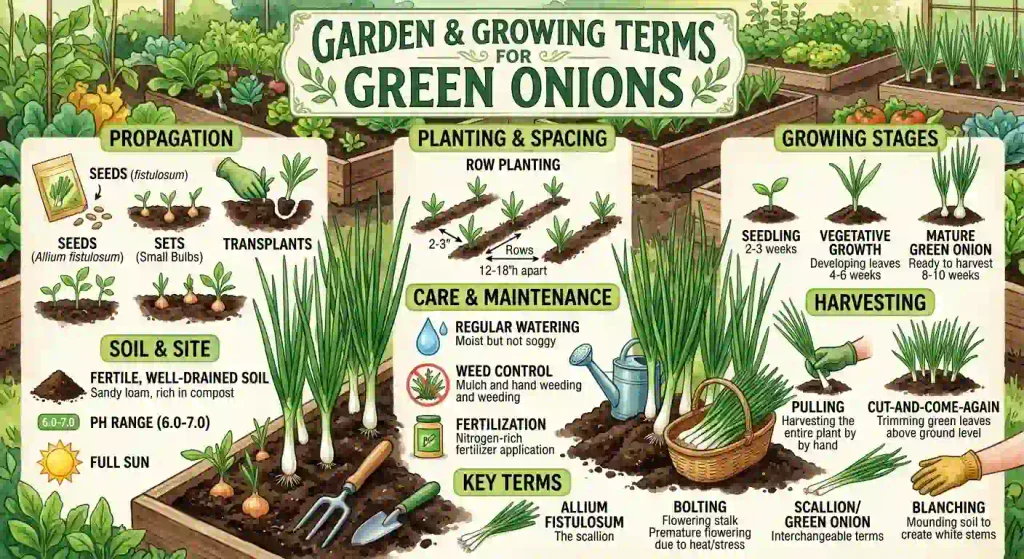
If you are searching for green onion names for gardening, seed shopping, or plant identification, these terms can help you find the right variety.
Bunching Onions
Bunching onions are grown mainly for their leaves and stems rather than large storage bulbs. Many varieties form clusters or divide into several shoots. They are popular in home gardens because the leaves can be harvested as needed.
Perennial Bunching Onions
Some bunching onion varieties can grow for several seasons in suitable conditions. They may form clumps and produce fresh shoots after harvesting. Their long growing life makes them useful for gardeners who want a steady supply of green leaves.
Scallion Seeds
Scallion seeds are seeds sold for growing green onions. The label may identify a particular variety, so check the plant’s expected bulb size, maturity time, and suitability for your climate.
Spring Onion Seedlings
Spring onion seedlings are young plants grown from seed. They can be transplanted or thinned as they grow. In many gardens, the plants are harvested while their stems remain slender and their bulbs are small.
Evergreen Bunching Onion
Evergreen bunching onion is a variety name used for certain cultivars sold for their long green leaves and ability to produce successive harvests. Always check the seed packet because cultivar descriptions and growing traits can vary by supplier.
White Lisbon Onion
White Lisbon is a well-known spring onion variety grown for its white base and green leaves. It is often harvested young and used fresh. The name is especially useful when looking for a specific seed variety rather than a general synonym.
Ishikura Onion
Ishikura is a Japanese bunching onion variety known for its long white stem and green leaves. It is often grown for culinary use. The name refers to a cultivar, not a universal synonym for every green onion.
Welsh Onion Seeds
Welsh onion seeds are used to grow Allium fistulosum. Depending on the variety, plants can produce upright leaves and long, pale stems. This seed label is useful for gardeners who want a bunching onion rather than a typical bulb onion.
Short and Simple Green Onion Alternatives 📝
These terms are handy for recipe notes, grocery lists, menus, and everyday conversations. Some are true synonyms, while others are short descriptions of the ingredient.
Scallions
A simple, widely recognized alternative to green onions in American English. It is a good choice for recipes, menus, and cooking instructions.
Spring Onions
A familiar term in British, Australian, and many international recipes. Check the intended bulb size if the recipe comes from a region where spring onions are distinguished from scallions.
Green Onion Bunches
This phrase describes the way the vegetable is commonly sold. It works well on shopping lists and in market descriptions, but it is not a different name for the plant itself.
Bunching Onions
A useful term for gardening and plant identification. It often refers to onions that are grown for their green leaves and do not develop large bulbs.
Salad Onions
A practical term for young onions intended for fresh eating. Its meaning can vary by region, so it is best used when the recipe or market context is clear.
Onion Scallions
This phrase occasionally appears in informal writing to clarify that the ingredient is an onion rather than another type of scallion-like vegetable. The more natural and common term is simply scallions.
Green Shallots
A regional term used in some markets and recipes. Because shallot can also mean a separate bulb onion, confirm the ingredient before using this phrase in an international recipe.
Fresh Scallions
A clear phrase for green onions intended to be used fresh. It works well in recipes where crisp leaves and a mild, sharp flavor are important.
Which Green Onion Name Should You Use? 🛒
The best term depends on your location and why you need the name. Use this quick guide to choose a clear and accurate option.
| Situation | Best term to use |
| American recipes | Green onions or scallions |
| British recipes | Spring onions |
| Australian recipes | Spring onions, sometimes green shallots |
| South Asian recipes | Hara pyaz or green onions |
| Vietnamese recipes | Hành lá |
| Japanese recipes | Negi, when appropriate to the variety |
| Korean recipes | Pa, with the specific type checked |
| Gardening guides | Bunching onions or the exact cultivar |
| Recipe instructions | Green onions or scallions |
| Botanical identification | The plant’s scientific name |
For most general readers, green onions are the clearest choice. If you are writing for an American audience, scallions are equally natural. For British readers, spring onions may be more familiar.
Be careful when replacing one onion with another. A thick Japanese negi, a small scallion, a leek, and a chive do not have exactly the same texture or flavor. They may work in similar dishes, but the result can change.
Green Onion Synonyms vs. Related Ingredients 🧄
Not every name that appears in a green onion search is a true synonym. Some words refer to a particular species, a regional naming tradition, or a different ingredient altogether.
Frequently Asked Questions
1. What is another name for green onions?
The most common alternative names for green onions are scallions and spring onions. Scallions are especially common in the United States, while spring onions are widely used in the United Kingdom and Australia. The terms often describe the same vegetable, but local usage can differ.
2. Are scallions and green onions the same thing?
Yes, scallions and green onions usually refer to the same type of vegetable. Both have long green leaves and a narrow white base. In some regions, however, scallions specifically refer to onions that have not formed a noticeable bulb. The exact meaning depends on local naming habits.
3. What do British people call green onions?
British people commonly call them spring onions. The term appears in grocery stores, cookbooks, and everyday recipes. Spring onions are often eaten raw in salads or cooked in stir-fries. Some varieties may have a more developed bulb than the slender onions sold as scallions in America.
4. What are green onions called in India and Pakistan?
In Hindi and Urdu, green onions are commonly called hara pyaz. They are used in fried rice, noodles, vegetable dishes, omelets, and salads. The green leaves and white base can both be eaten. Local market names may vary, but hara pyaz is a widely understood term.
5. Are spring onions and scallions exactly the same?
Not always. Scallions usually have a slim white base with little or no bulb development. Spring onions may be harvested at a similar stage, but the term can also describe young onions with a rounded bulb. Many recipes use the words interchangeably, so check the vegetable pictured or described.
6. Can I use green onions instead of scallions in a recipe?
Yes. In most recipes, green onions and scallions are interchangeable because they usually refer to the same vegetable. Use the white portion when you want a stronger onion flavor and the green leaves for a fresher taste. Add the leaves near the end of cooking if you want to preserve their color.
7. Are chives another name for green onions?
No. Chives and green onions belong to the same plant family, but they are different plants. Chives have very thin leaves and a delicate onion flavor, while green onions have a more substantial white base and green tops. Chives can work as a garnish, but they do not provide the same texture.
Conclusion
There are several other names for green onions, but scallions and spring onions are the two most useful alternatives to remember. The name often depends on where you live, which recipe you are following, or how the vegetable is grown.
If you are shopping in the United States, look for green onions or scallions. In the United Kingdom and many Australian recipes, spring onions is the more familiar term. In South Asian cooking, hara pyaz is another helpful name to know.
Remember that related ingredients such as chives, leeks, and shallots are not always direct substitutes. When a recipe calls for a particular onion, check its size, flavor, and appearance before making a swap. Knowing these differences helps you shop confidently and get the flavor you want.